Take the free 60-second assessment
START NOWIt Was Never a Fat Problem: What Actually Changes in a Woman's Body After 40, and the 12-Minute Sequence That Works With It

In this article
Somewhere around 41, the rules quietly changed. The diet that used to work stopped working. Your thighs started looking dimpled in a way they never did before. And the advice everyone gives you - eat less, move more - started sounding less like a plan and more like an insult.
If you have found yourself asking any of these, you are in the right place:
Why did every diet stop working at once?
Why will this belly not move, no matter what I do?
Why does my skin look different when my weight has barely changed?
You are not imagining it, and you are not doing it wrong. Something specific changed. Almost nobody explains what.
What actually changed at 41
Three things shift after 40, and they arrive together. Oestrogen declines. Daily movement loses its variety - the same commute, the same chair, the same few positions. And years of accumulated sitting finally add up.
All three land on the same tissue. Not muscle. Not fat. The connective tissue that wraps around both.
What you have is a tissue problem.
The tissue nobody ever trained
Fascia is a continuous web of connective tissue wrapping every muscle, organ, nerve and vessel in your body. Picture the thin white film you peel off a chicken breast. That is fascia. Healthy, it is springy and hydrated, and it glides.
When it glides, everything underneath works properly - lymph drains, blood moves, muscles slide past each other cleanly.
When it stiffens and sticks together, which is exactly what sitting, stress and hormonal change do to it, you get a very particular set of symptoms:
- Puffiness that comes and goes with no obvious cause
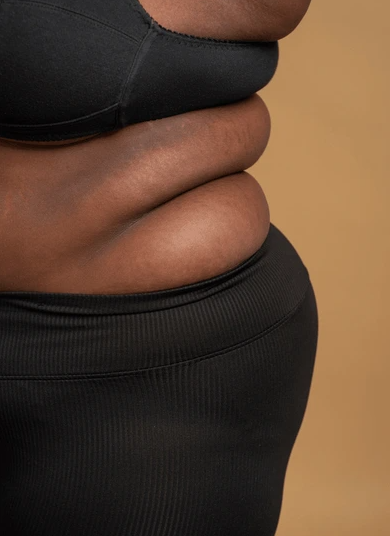
- Dimpled, uneven skin on thighs, hips and the lower belly
- Weight that will not shift from specific places, whatever the deficit
- Morning stiffness that takes twenty minutes to walk off
- A body that feels tight and stuck rather than simply heavy
Read that list again honestly. How much of it is fat, and how much of it is tissue?
That distinction matters, because the two need completely different work - and one of them has been quietly sabotaging the other.
Not sure whether this is your problem?
The 60-second assessment maps where you are actually restricted, and which zones to work first.
TAKE THE FREE ASSESSMENT No credit card. About a minute.Why training harder made it worse
This is the part that stings, because it means the effort you have been putting in has been working against you.
When tissue is already stiff and dehydrated, high-impact training loads it repeatedly without ever restoring its glide. Tissue responds to load it cannot handle in the only way it knows: it lays down more of itself. Thicker. Tighter.
So you train harder. You feel more sore. You look more swollen. And you conclude you need to train harder still.
That loop is where a lot of women lose two or three years.
Releasing the tissue first is not a gentler alternative to training. It is the step that makes training work again.
The four-part sequence
Four components, in order. Eight to fifteen minutes. No equipment at all.
1. Decompression. Slow, long-hold positions that take a joint through its full available range without load. This is the part that rehydrates the tissue - fascia responds far better to sustained, low-intensity stretch than to bouncing or forcing.
2. Glide work. Small oscillating movements that restore the sliding surfaces between tissue layers. Strange the first time. Obvious by the fourth.
3. Lymphatic sequencing. Directional movement in a specific order, always draining toward the trunk. Order matters more than effort here, which is why ordinary stretching does not produce the same de-puffing.
4. Low-load reintegration. Gentle bodyweight patterns that teach newly-mobile tissue to hold its range. Skip this and everything tightens back within about forty-eight hours.
- No equipment, no gym, and no floor work if your knees do not allow it
- 8 to 15 minutes, done at home, in whatever you are already wearing
- Built for beginners and for women who have not trained in years
- Scales with you - the same sequence gets more demanding as you do
What the first two weeks actually look like
Here is the honest timeline, because the internet is full of promises that set women up to quit on day nine.
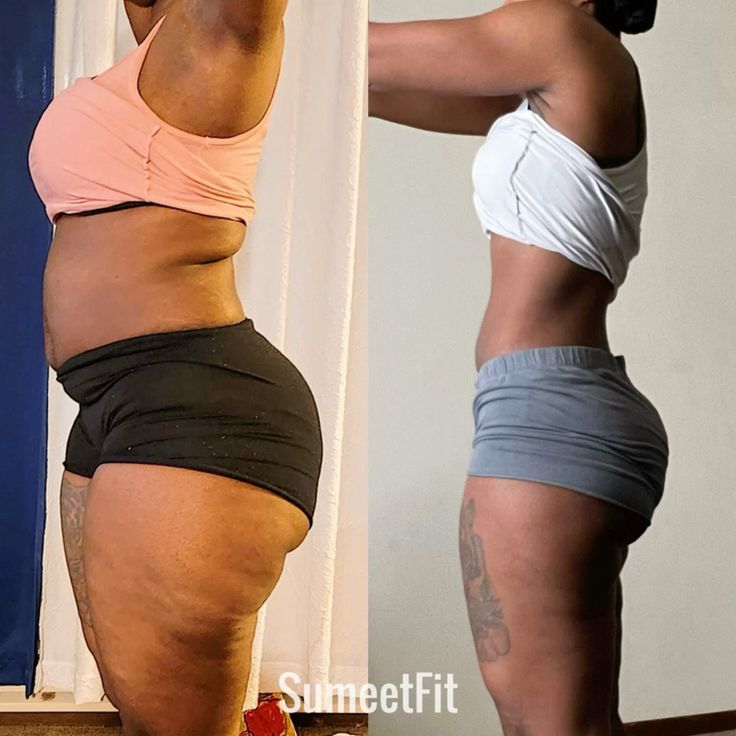
Days 1 to 3. What changes first is how you feel, not how you look. Less morning stiffness. Easier movement. Many women notice less puffiness in the face, hands and ankles - that is fluid, not fat, and it is real without being the goal.
Days 4 to 10. Range of motion improves measurably. Clothes start sitting differently at the waist and hips, usually well before the scale does anything at all. This is the point where most women stop caring what the scale says.
Weeks 2 to 4. Surface texture on thighs and hips begins to change. Training capacity rises - which is when fat loss actually starts to compound. This is where the two halves of the method finally meet.
Measure your waist instead, and take a photo on day one.
Results vary considerably. Someone who sits ten hours a day with real restriction will see faster early change than someone already active - there is simply more to release. Progress is rarely a straight line, and anyone telling you otherwise is selling you the line rather than the result.
Why it has to be personal
Restriction patterns are not universal, which is why a single printed routine helps roughly one woman in three.
Fifteen years at a desk puts restriction through the hip flexors, the front of the chest and the upper back. Two pregnancies leave a completely different pattern through the abdominal wall and pelvis. An old ankle injury has you compensating up an entire side.
Give all three the same sequence and you will help one of them.
The sequence has to begin where your restriction actually is, work at a level your joints will tolerate, and fit the number of days a week you will genuinely show up. That is four variables - and it is why this starts with an assessment rather than a video library.

Where to start
The assessment takes about a minute. It asks your age, how you spend your day, where you hold stiffness, which zones you want to change, and how many days a week you can realistically commit.
It uses those answers to build a release sequence that starts where you actually are - and it removes anything your knees, back, neck or hips have told us to avoid.
It is free, and you see your assessment at the end either way.
Find your restriction pattern
60 seconds. A sequence built around your answers at the end of it.
START THE FREE ASSESSMENT Free. No credit card required.Disclaimer: This article is general information, not medical advice, diagnosis or treatment, and has not been evaluated by any regulatory body. Individual results vary and are not guaranteed. Consult a qualified healthcare professional before beginning any exercise programme, particularly if you are pregnant, recovering from injury or surgery, or managing a chronic condition.
Advertising disclosure: This page promotes a product we sell.